When people picture a trucking career, they often imagine long stretches of highway, sleeper cabs, and weeks spent away from home.
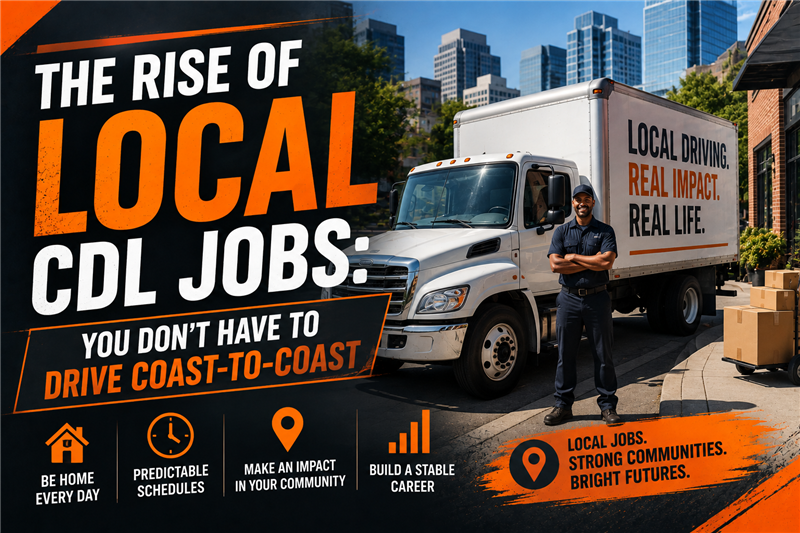
That is one version of trucking—but it is far from the only one.
A growing number of CDL opportunities allow professional drivers to work closer to home, with many local and home-daily positions available across industries such as food distribution, construction, beverage delivery, waste management, and regional freight. Current job listings show companies actively recruiting for local and home-daily CDL-A positions, including opportunities that hire recent CDL graduates. (Roehl Jobs)
For people who like the idea of a trucking career but don't want to spend weeks on the road, local driving could offer a different path.
What Does "Local" Truck Driving Actually Mean?
Local trucking generally means operating within a defined geographic area rather than traveling across the country.
Depending on the employer, a local driver may:
- Start and finish each shift at the same terminal
- Return home every night
- Make multiple deliveries during a shift
- Operate within a metropolitan or regional area
- Follow consistent routes or delivery schedules
Some local positions may still involve significant driving or early morning and overnight schedules. "Local" doesn't necessarily mean a traditional 9-to-5 job.
But for many drivers, getting home every day can be a major advantage.
You Don't Have to Choose Between Trucking and Your Home Life
One of the biggest misconceptions about getting a CDL is that you have to be willing to live on the road.
That isn't necessarily the case.
Local and home-daily positions are available in industries ranging from food and beverage distribution to construction materials and waste management. (HDS Truck Driving Institute)
That creates opportunities for people who want to build a career in transportation while maintaining a more predictable connection to their home and community.
For someone with a spouse, children, or other family responsibilities, that difference can be significant.
Instead of being gone for days or weeks at a time, a home-daily position can allow you to return home after your shift.
Where Are Local CDL Drivers Working?
Local trucking is much broader than simply delivering packages.
CDL drivers can find opportunities in industries such as:
Food and Beverage
Grocery stores, restaurants, and businesses need constant deliveries.
Drivers may transport food, beverages, refrigerated products, and other supplies to local customers.
Construction and Building Materials
Construction projects depend on materials arriving when they're needed.
CDL drivers can transport products such as building materials, equipment, and other supplies to job sites throughout a local or regional market.
Waste and Environmental Services
Waste collection and environmental services also depend on commercial drivers to move materials safely and efficiently.
LTL and Regional Delivery
Less-than-truckload carriers consolidate shipments from multiple customers, creating routes that can keep drivers within a regional market.
Manufacturing and Distribution
Factories and distribution centers need drivers to move products between facilities, warehouses, stores, and customers.
The common thread is simple: local economies need local drivers.
Local Doesn't Mean Less Important
It can be easy to think of local driving as a smaller version of long-haul trucking.
It isn't.
Local drivers are responsible for moving the products businesses and consumers depend on every day.
They may make several stops during a shift, navigate busy city streets, work with customers, manage delivery schedules, and operate large commercial vehicles in challenging environments.
In some ways, local driving can require a different skill set than simply putting miles on the interstate.
What About Pay?
This is where prospective CDL students need to do their homework.
There isn't one universal salary for "local trucking."
Pay varies significantly depending on:
- Location
- CDL class
- Experience
- Endorsements
- Type of freight
- Schedule
- Hours worked
- Employer
- Overtime opportunities
Some local positions can offer competitive compensation, benefits, and home-daily schedules. Current listings demonstrate that home-daily CDL opportunities exist across multiple markets, including the Midwest. (Roehl Jobs)
The important thing is to compare the entire job—not just the advertised pay.
A slightly different paycheck may be worth it to someone who values being home every night. Another driver may prefer the higher earning potential or travel associated with long-haul work.
The right choice depends on the driver's priorities.
Can New CDL Graduates Get Local Jobs?
This is one of the biggest questions new drivers have.
The answer is sometimes—but don't assume every local job is entry-level.
Some local employers hire recent CDL school graduates and provide additional training. Others require previous commercial driving experience. (Roehl Jobs)
That means new drivers should look carefully at job requirements rather than automatically assuming they need to spend years driving over the road.
When searching for your first position, look for terms such as:
- Entry-level
- Recent CDL graduates
- New drivers
- Paid training
- Company training
- Home daily
- Local routes
- Dedicated routes
And be prepared to consider several types of employers.
Your First CDL Job Doesn't Have to Be Your Forever Job
Even if your first position isn't exactly what you imagined, it can help you build the experience needed for future opportunities.
You might start with a regional position and eventually move into a local role.
Or you could start locally and pursue additional endorsements that open up specialized opportunities.
Your career could eventually take you toward:
- Specialized freight
- Tanker driving
- LTL
- Dedicated routes
- Construction
- Fleet operations
- Driver training
- Owner-operator opportunities
Your first job is a starting point—not a permanent destination.
How 160 Driving Academy Helps Prepare You for the Local Market
At 160 Driving Academy, students aren't trained for just one type of trucking career.
The goal is to build the fundamental skills needed to become safe, capable professional drivers.
That includes learning how to:
- Operate commercial vehicles safely
- Perform inspections
- Maneuver and back effectively
- Handle real-world driving conditions
- Follow commercial driving regulations
- Develop professional driving habits
Those skills can provide a foundation for pursuing different types of CDL careers—including local opportunities.
The key is understanding what employers in your area are looking for and preparing accordingly.
Think Beyond the Long-Haul Stereotype
If you've avoided trucking because you assumed it meant spending weeks away from home, it may be worth taking another look.
The trucking industry is much bigger than coast-to-coast hauling.
There are local drivers moving food, materials, equipment, freight, and other essential goods every day.
For some people, that combination of professional driving, steady demand, and getting home regularly could make trucking a much better career fit than they expected.
Your CDL. Your Route. Your Career.
Getting a CDL doesn't lock you into one lifestyle.
You can explore different types of driving, different industries, different schedules, and different career paths as you gain experience.
If being home every night matters to you, don't automatically rule out trucking.
Start by getting your CDL. Then explore where it can take you—including opportunities close to home.
160 Driving Academy can help you build the foundation for a professional driving career and prepare for the opportunities waiting after graduation.