
July 28, 2026
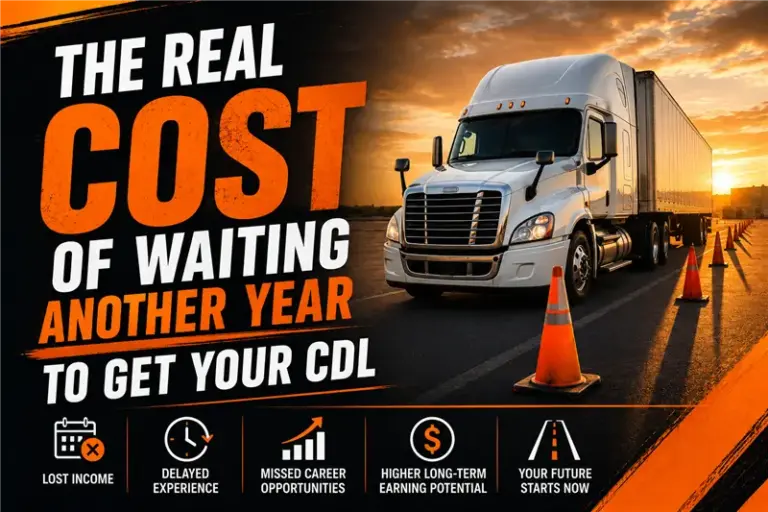
The Real Cost of Waiting Another Year to Get Your CDL
Many people think about earning their CDL for months—or even years—before taking the first step.
Learn MoreOctober 1, 2025

In an industry defined by movement, it only takes one hard turn to send everything in a new direction. That moment arrived on April 28, 2025, when President Donald Trump issued a sweeping rule that’s reshaping who gets to drive and how companies hire.
President Trump signed an Executive Order for truck drivers to speak English, a move that reactivates strict federal enforcement of long-standing language requirements for commercial drivers. As of summer 2025, drivers who can’t read road signs or communicate clearly with officials risk being placed out of service on the spot. For many fleets and drivers, it’s a jolt that goes far beyond paperwork.
Officially titled “Enforcing Commonsense Rules of the Road for America’s Truck Drivers,” the order revives full enforcement of English proficiency standards originally set by the Federal Motor Carrier Safety Administration (FMCSA). It also overturns 2016 guidance that had relaxed those rules.
Within 30 days of the updated policy, more than 1,500 drivers were removed from service during roadside inspections. Enforcement is now underway nationwide, and more trucks are being pulled off the road if drivers can’t prove sufficient English fluency.
That means “Trump to mandate English proficiency for truck drivers” isn’t just a headline. It’s a shift in how licensing, employment, and safety compliance will work moving forward.
The CDL English requirement has technically been on the books for years. According to FMCSA regulations, all commercial drivers must demonstrate the ability to:
Converse with the public and law enforcement.
But in practice, these standards were unevenly applied. A 2016 FMCSA memo advised officers not to place drivers out of service solely for language limitations. That has now changed. The Executive Order directs the FMCSA to resume strict enforcement, and inspection criteria have been updated accordingly based on the new CDL language requirements.
So, how English proficiency will work for truck drivers going forward depends on the state and even the individual inspector.
Here’s what’s consistent:
Some trucking companies are now embedding English tests into onboarding, while regions like Texas are launching ESL programs to help drivers stay on the job. But others worry the rollout lacks clarity, especially for bilingual drivers with heavy accents or limited written English.
The FMSCA truck driver English language proficiency rules are being enforced by both federal officers and state partners, meaning outcomes could vary. Industry groups have urged regulators to standardize enforcement to prevent discrimination.
Driver shortages remain one of the industry’s biggest concerns. But with more drivers now sidelined by language compliance, demand is rising even faster, especially for bilingual or fluent English speakers with valid CDLs.
Many carriers are boosting pay or adding hiring bonuses in response. In states like Washington, New York, and Illinois, average truck driver salaries already exceed $65,000 per year. That number is expected to rise in areas where compliance pressure is high and hiring becomes more selective.
Expect these shifts:
With the CDL English requirement now enforced at scale, regions with high freight activity and more frequent inspections are seeing the biggest impact. That’s creating pockets of especially high demand — and strong pay incentives — for qualified drivers who meet the new standard.
Here are some 2025 hotspots where jobs are plentiful and compensation is climbing:
| State | Avg. Annual Salary | Why It Pays Well |
| Washington | $68,400 | Port activity, union fleets, regulatory enforcement |
| New York | $67,500 | Urban freight, dense inspections |
| North Dakota | $66,000 | Oilfield work, seasonal demand |
| Illinois | $65,200 | Midwest hub, logistics volume |
| California | $64,700 | Port routes, regional pressure |
| New Jersey | $63,900 | Warehouse growth, enforcement zones |
| Oregon | $62,800 | West Coast freight, safety protocols |
| Texas | $58,400 | Huge network, bilingual demand |
| Missouri | $52,200 | Regional work, lower cost of living |
In states with more active inspection zones like California, New Jersey, and New York, the effects of the Executive Order are showing up fast. Carriers are scrambling to replace drivers who’ve been disqualified or discouraged by enforcement, and are willing to pay more for reliable, fluent operators.
Even in regions like Texas and Florida, where bilingual drivers are essential to local freight routes, recruiters are now offering ESL resources and pay bumps to attract and retain talent.
Looking Ahead: Language, Logistics, and a New Landscape for Drivers
Trucking in 2025 has shifted. The FMSCA truck driver English language proficiency policy has turned a long-standing rule into a make-or-break requirement. But it’s also opened doors for drivers ready to meet that challenge.
From seasoned pros to new CDL holders, the message is the same: Strong language skills mean stronger job options. And with more fleets boosting pay and focusing hiring in high-demand states, this could be the best time in years to enter or advance in the industry.
Whether you’re looking at regional routes, long-haul lanes, or specialty jobs, now is the time to align your skills with the rules — and the rewards.
July 28, 2026
Many people think about earning their CDL for months—or even years—before taking the first step.
Learn More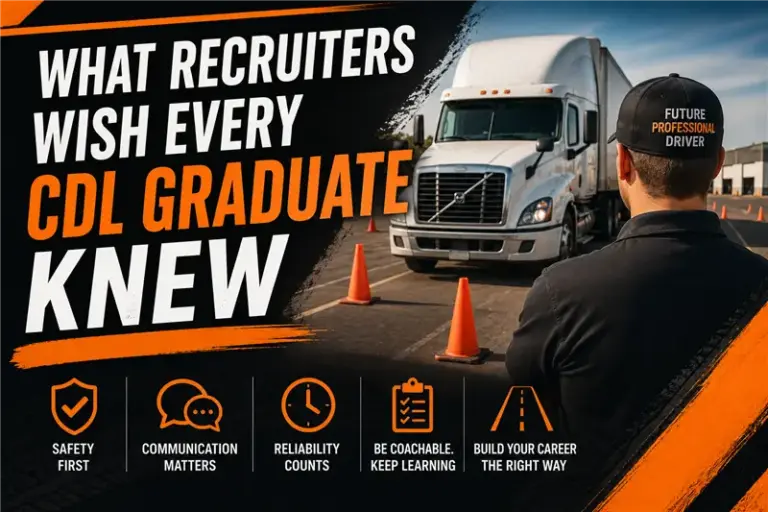
July 27, 2026
Graduating from CDL school is a major accomplishment. You’ve earned your Commercial Driver’s License, completed hands-on training, and are ready to begin your career. But landing your first trucking job takes more than simply having a CDL. Every day, trucking…
Learn More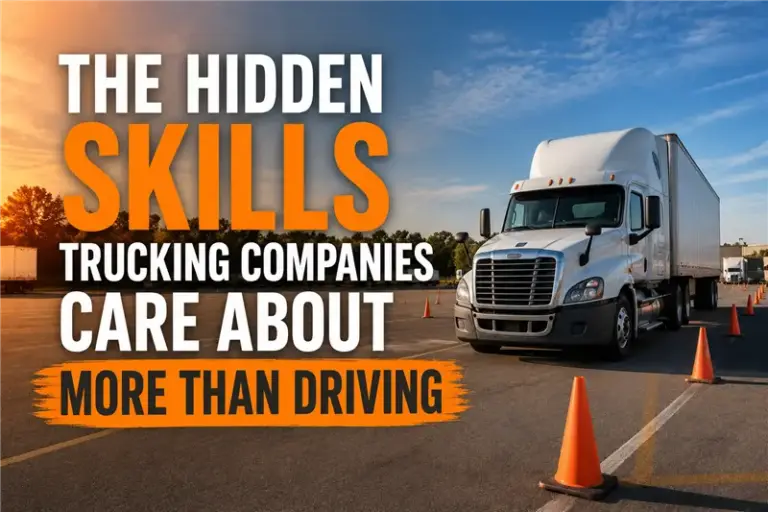
July 21, 2026
Truck driving is about much more than shifting gears, backing into a dock, or passing your CDL exam.
Learn More